
Did you know that several kinds of tree pruning techniques exist? Some are incredibly effective for growth control, while others compromise the tree’s structural integrity. Pollarding and topping the tree are two methods that seem similar at first glance, but they have major distinctions.
How do arborists define pollarding vs. topping? Get answers from the experts at Otto Tree Service, a trusted provider of tree services in Bloomfield Hills, MI.
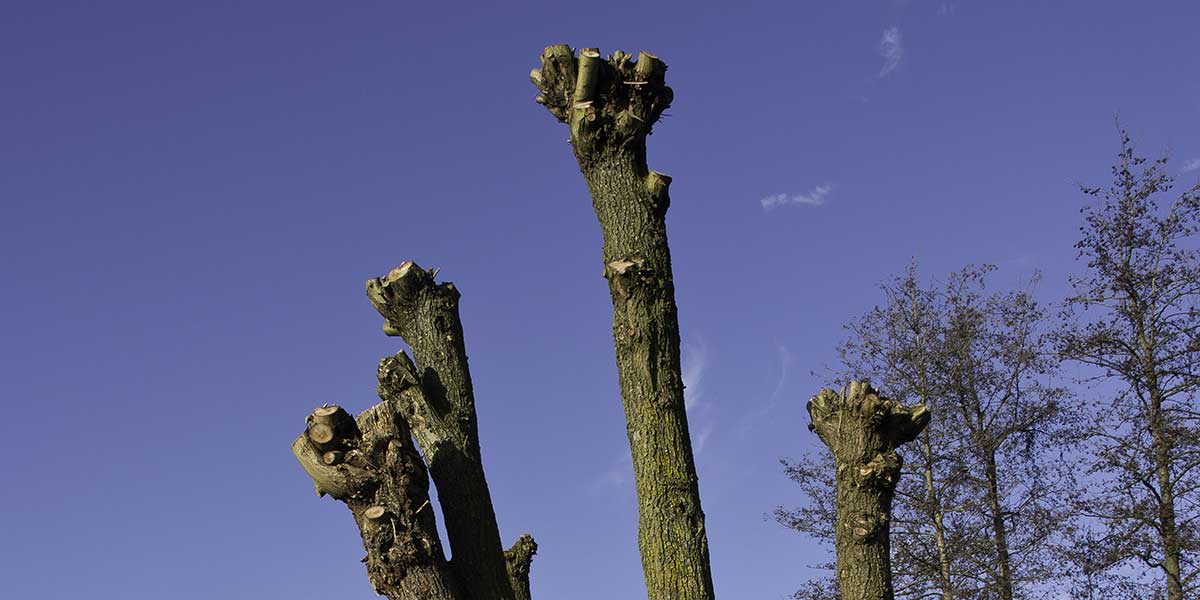
Understanding Tree Topping and Its Impact on a Structure’s Health
Suppose you decide to prune a tree in your yard yourself. The tree’s canopy extends beyond your reach, so instead of cutting select branches, you saw through the base of the canopy. The drastic height reduction may be jarring, but it’s fine since the tree will grow back, right?
Plenty of property owners make the mistake of topping trees without understanding the risks. Crown regrowth doesn’t always occur because of the significant stress put on the tree. Topping can create serious wounds, which makes the bark more susceptible to decay and disease.
How Pollarding Differs From Tree Topping
If you ask an arborist to describe pollarding vs. topping, they’ll say that the former is much more beneficial to the tree. Pollarding is the safer pruning technique, as it aids with tree health maintenance and growth control. Arborists strategically prune sections of the canopy so the tree maintains a certain height and the canopy remains dense.
This technique is commonly used on young trees, particularly in urban areas. Trees that line busy streets have limited space to grow, so pollarding them helps keep the canopy size manageable for the environment.
Create a Pruning Schedule for Proper Tree Management
How often will trees need pollarding vs. topping? If you want to preserve the tree’s structural integrity and aesthetic appeal, you should never completely top it. Consult an arborist if select branches are dead or encroach on structures like power lines or roofs.
Professionals now recognize topping as an outdated and ineffective pruning method. Instead of cutting off the entire canopy, they can either prune only the compromised branches or begin pollarding the tree.
If you want your vegetation to remain at a manageable height, experts recommend pollarding while the tree is still young. You should book this service once a year, ideally during the winter for the best results. Pruning during the dormant season allows the tree to recover more easily than making cuts during the growing season.
Book Professional Pruning Services Today
Understanding the different methods of tree pruning is essential. If you aren’t familiar with pollarding vs. topping, you may end up harming your tree’s health instead of encouraging new growth. Turn to Otto Tree Service to clear up any confusion and ensure your pruning project goes smoothly.
We proudly serve Michigan communities like Waterford, Bloomfield Hills, and more. Team up with us if you’re looking for an experienced and reliable tree care company. Call (248) 617-8644 to learn more about our services and request a quote today.
